Puffin Paradise: A Day on Skomer Island
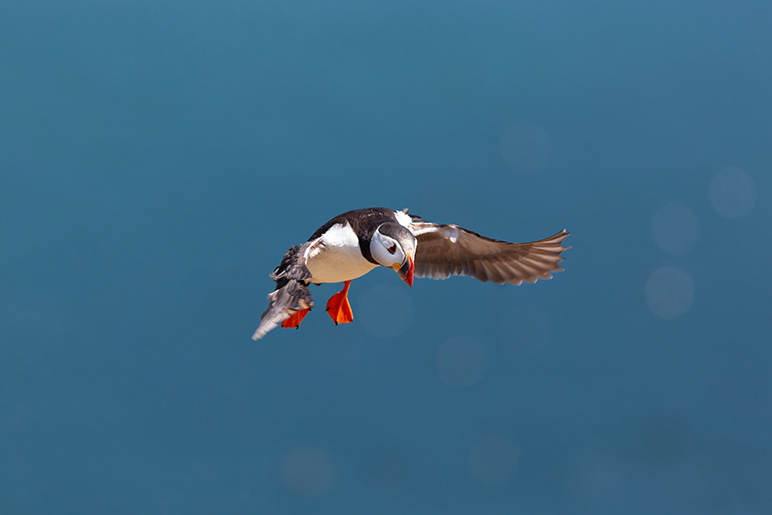
There are few places in the UK where wildlife feels truly uninterrupted by the modern world. Skomer Island, a small volcanic patch off the coast of Pembrokeshire, Wales, is one of those rare exceptions. In the summer of 2023, I packed my long lenses and boarded the small Dale Queen ferry, bound for one of the most densely populated Atlantic puffin colonies in the world.
Stepping onto the island, you are instantly hit by the sheer volume of life. Thousands of puffins stream overhead, their wings beating in a frantic, signature whir as they rush back from the sea to feed their underground chicks. For a photographer, it's a beautiful exercise in patience, tracking focus, and isolating characters amidst the beautiful chaos of the nesting grounds.
An intimate look into the daily rhythms of Skomer's most famous residents.
1. Social Bonds & Island Rhythms
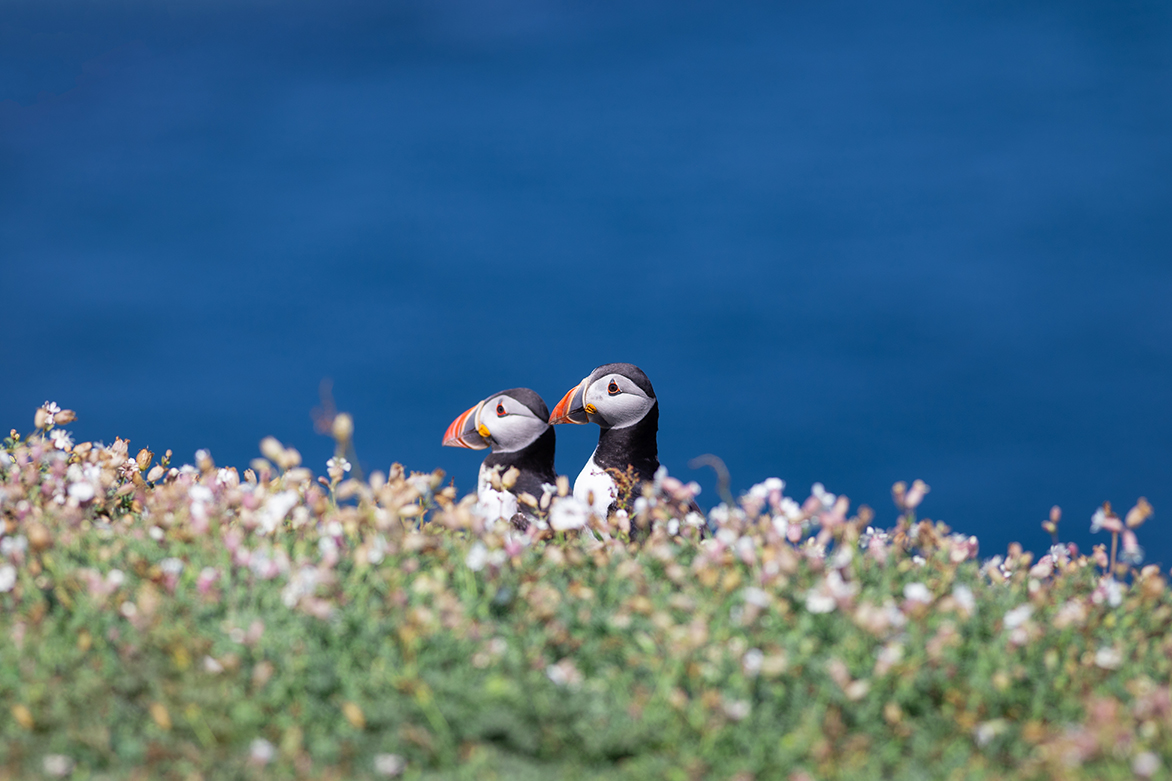
While puffins spend the harsh winter months entirely isolated out at sea, their return to the cliffs of Skomer is defined by intense social interaction. They mate for life, and observing their reunions along the grassy clifftops is one of the most rewarding elements of wildlife tracking.
The Clifftop Couples
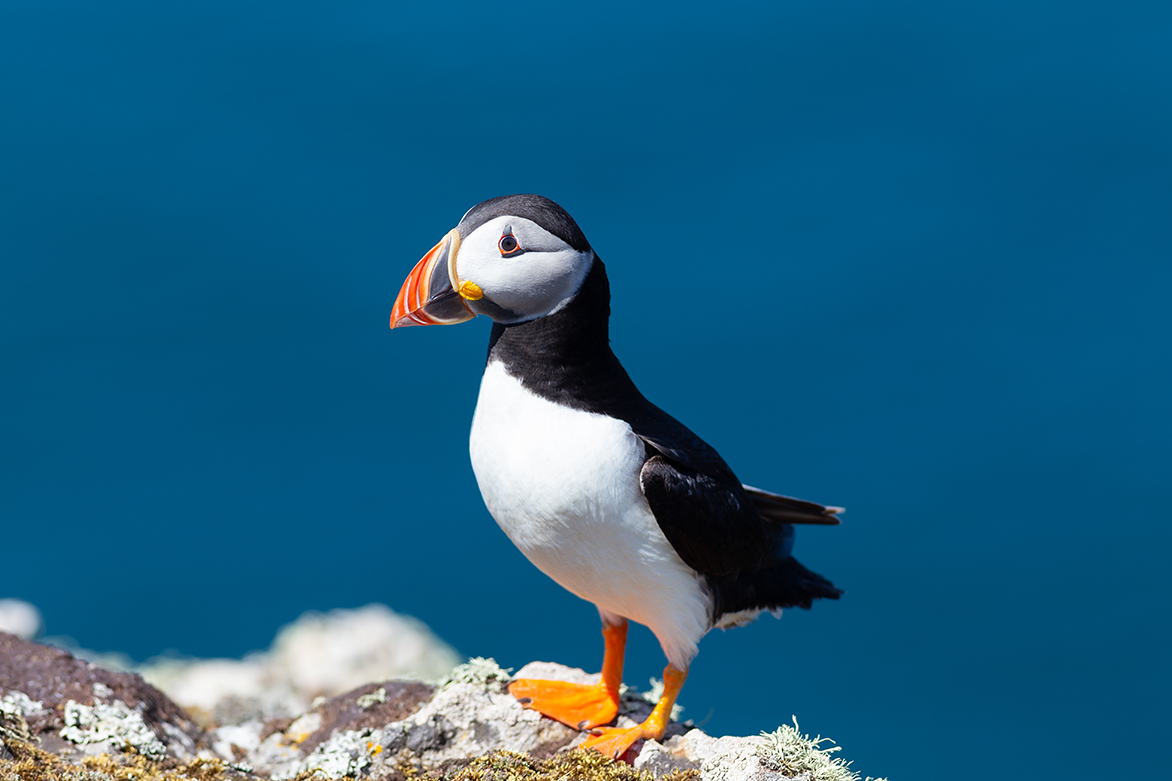
Walking along the designated island paths, you get a front-row seat to their subtle communication styles. I spent a great deal of time waiting for moments of stillness, capturing couples standing guard outside their burrows and single puffins surveying the territory, evaluating the skies before taking flight into the blustery headwinds.
2. Isolation & High Contrast Landscapes
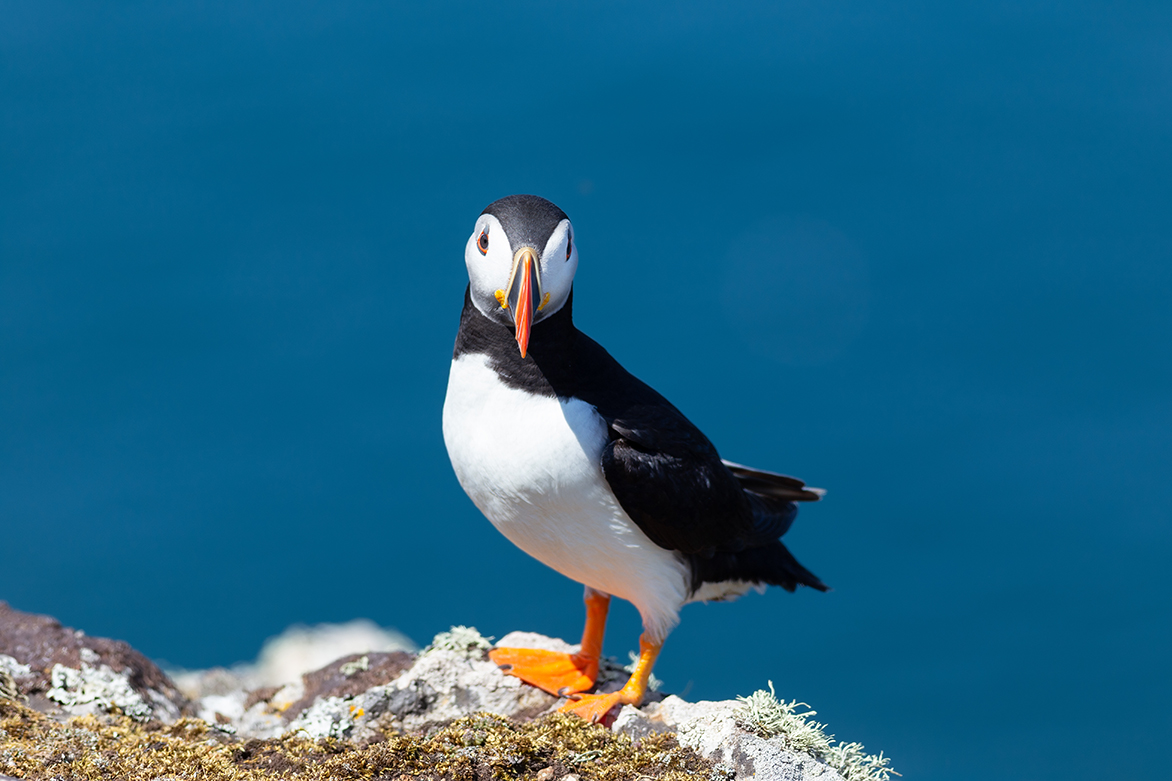
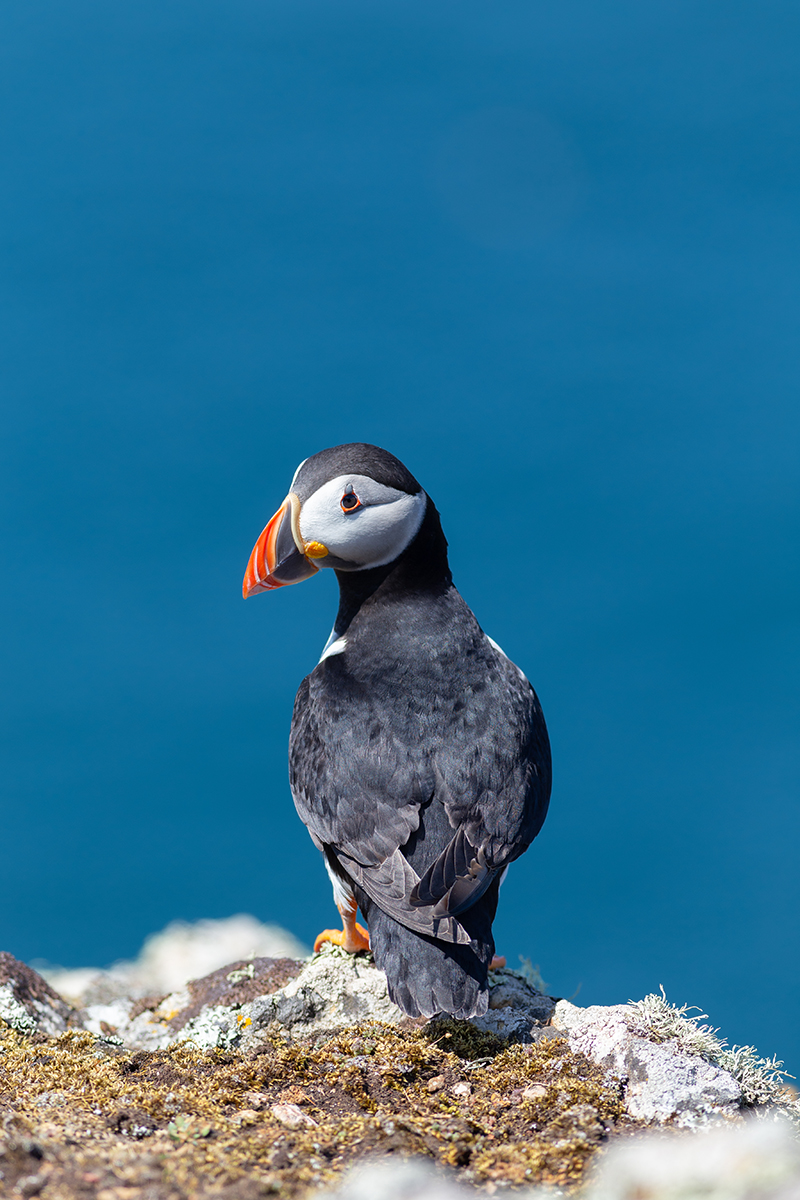
Beyond the tight portraits, the real magic happens when you let the unique marine atmosphere frame the subject. Skomer is ringed by deep blue waters and sheer drops that create striking natural backdrops when the light hits the coast just right.
Isolating the Profiles
By positioning myself low to the ground and utilizing a wide aperture, I worked to melt away the bustling background elements. This technique allowed me to capture the rich, graphic contrast of their plumage—the brilliant white chest elements, midnight-black back feathers, and the iconic, multi-toned beak—cleanly isolated against the deep, deep blue tones of the Atlantic Ocean below.

2 Comments on "Puffin Paradise: A Day on Skomer Island"